Bohan Lyu
I'm a PhD student at
Previously, I worked on AI for Math and self-evolving intelligence at
I received my double bachelor's degree in Computer Science and Economics from Feel free to reach out if you want to chat about research or collaboration! |

|


 UCSD
UCSD
News
|
Research (* indicates equal contribution, highlight indicates representative papers)
|
|
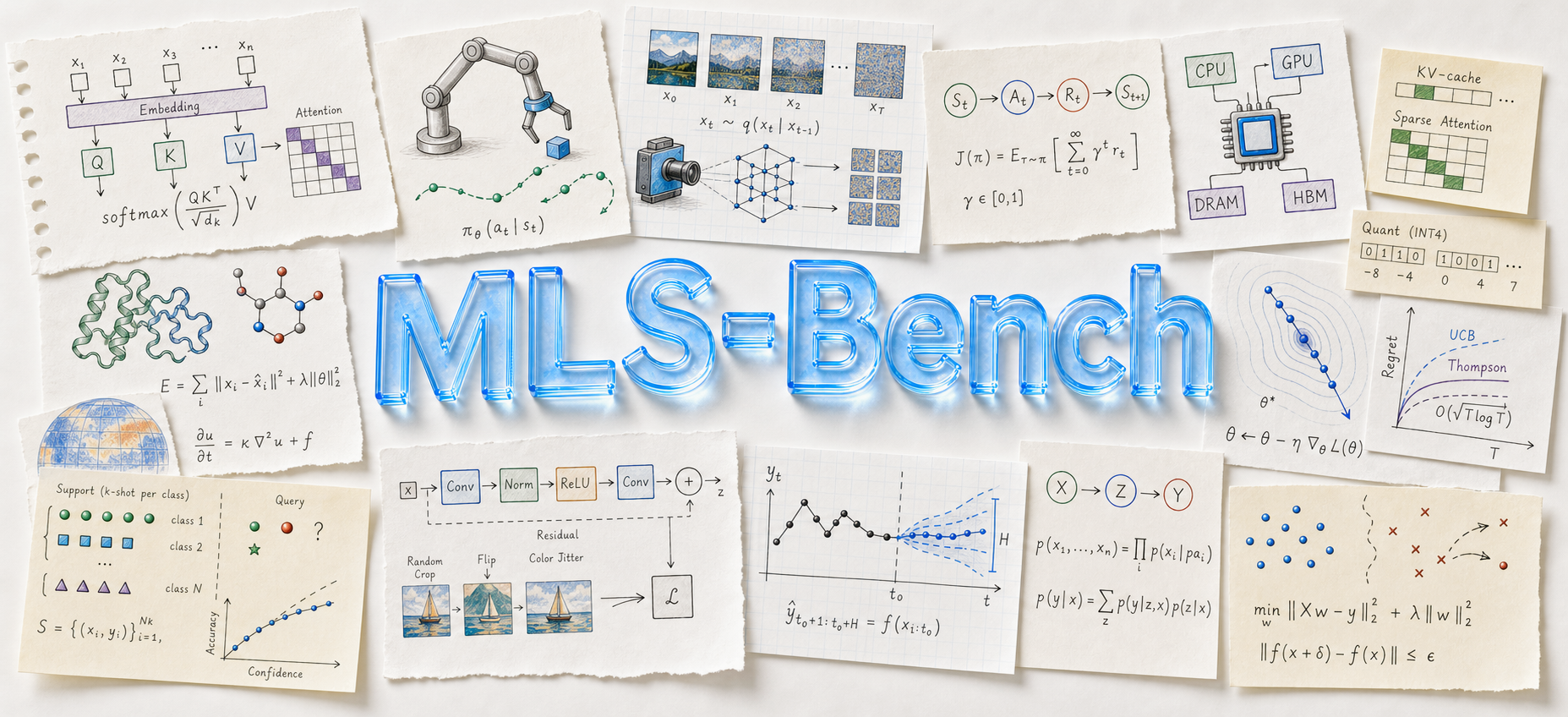
MLS-Bench: A Holistic and Rigorous Assessment of AI Systems on Building Better AIBohan Lyu*, Yucheng Yang*, Siqiao Huang*, Jiaru Zhang*, Qixin Xu*, Xinghan Li*, Xinyang Han*, Yicheng Zhang*, Huaqing Zhang*, Runhan Huang, Kaicheng Yang, Zitao Chen, Wentao Guo, Junlin Yang, Xinyue Ai, Wenhao Chai, Yadi Cao, Ziran Yang, Kun Wang, Dapeng Jiang, Huan-ang Gao, Shange Tang, Chengshuai Shi, Simon S. Du, Max Simchowitz, Jiantao Jiao, Dawn Song, Chi Jin NeurIPS 2026 E&D Track (Oral, Top 0.4%) arXiv / Code / Website / BibTeX / We introduce MLS-Bench, a benchmark of 140 tasks across 12 domains for evaluating whether AI systems can invent generalizable and scalable ML methods, and find that current agents remain far from reliably surpassing human-designed methods. |
|
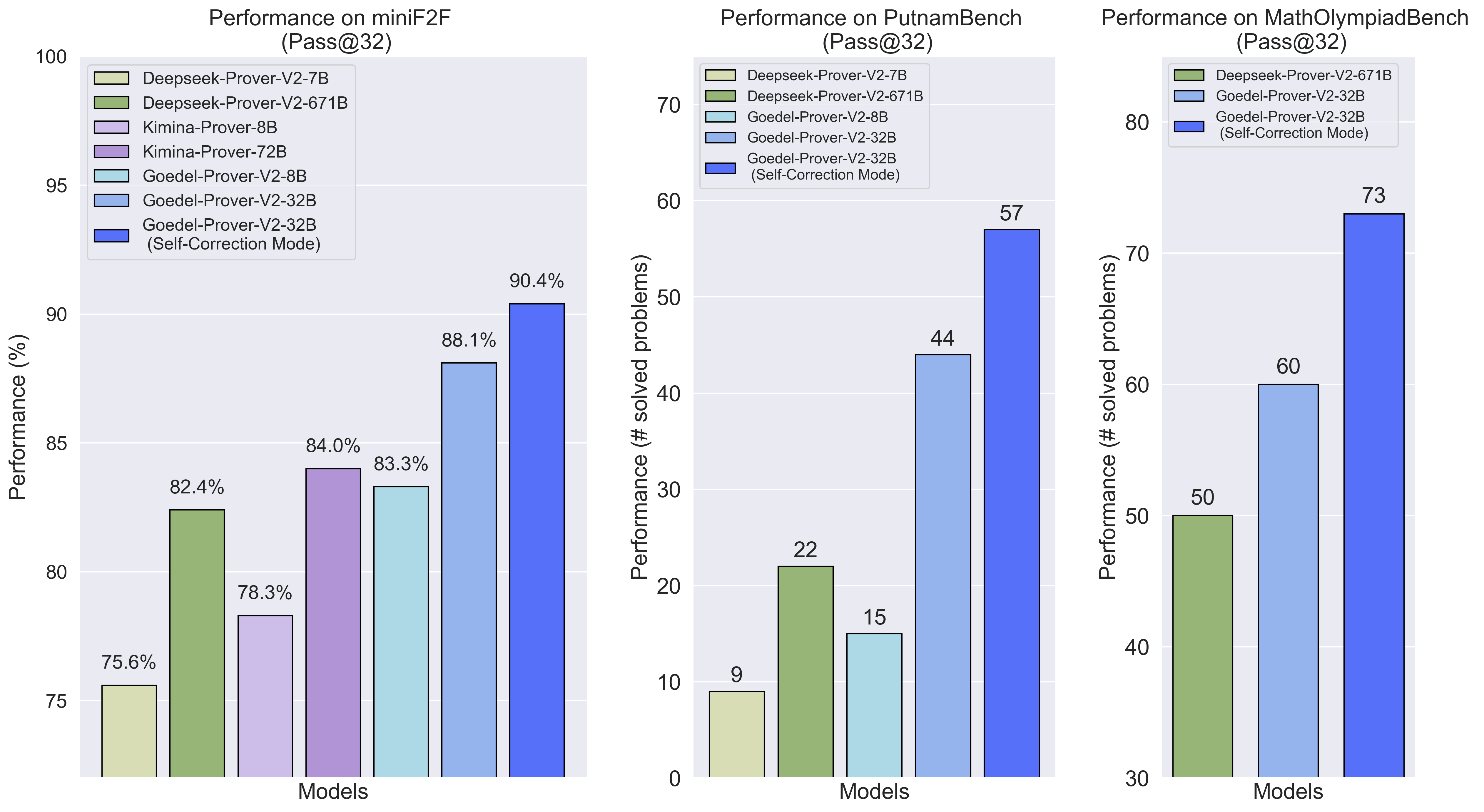
Goedel-Prover-V2: Scaling Formal Theorem Proving with Scaffolded Data Synthesis and Self-CorrectionYong Lin*, Shange Tang*, Bohan Lyu*, Ziran Yang*, Jui-Hui Chung*, Haoyu Zhao*, Lai Jiang*, Yihan Geng*, Jiawei Ge, Jingruo Sun, Jiayun Wu, Jiri Gesi, Ximing Lu, David Acuna, Kaiyu Yang, Hongzhou Lin, Yejin Choi, Danqi Chen, Sanjeev Arora, Chi Jin ICLR 2026, AI4MATH @ ICML 2025 (Oral) arXiv / Code / Slides / Website / BibTeX / Goedel-Prover-V2 sets new state-of-the-art in automated proof generation with dramatically smaller models, using scaffolded training, self-correction, and model averaging to outperform systems 20-100x larger on key mathematical benchmarks. |
|
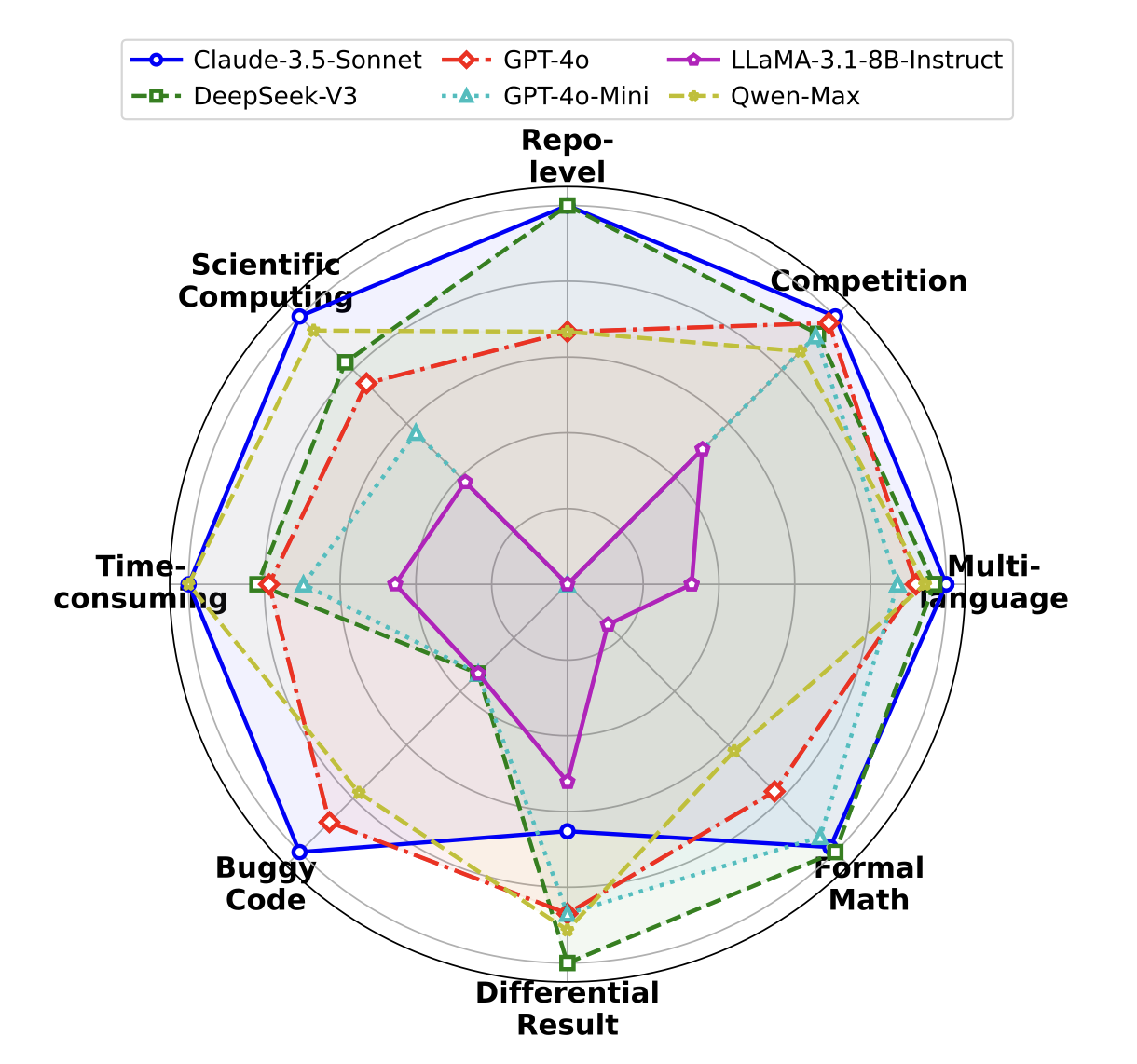
SURGE: On the Potential of Large Language Models as General-Purpose Surrogate Code ExecutorsBohan Lyu*, Siqiao Huang*, Zichen Liang* EMNLP 2025 (Main, meta score top 0.3%) arXiv / Code / Website / BibTeX / SURGE evaluates LLMs’ ability to predict code execution across eight key areas. While they show promise, limitations prevent general-purpose surrogate execution. This is an extension of a course project that does not reflect the focus of my research. |
|
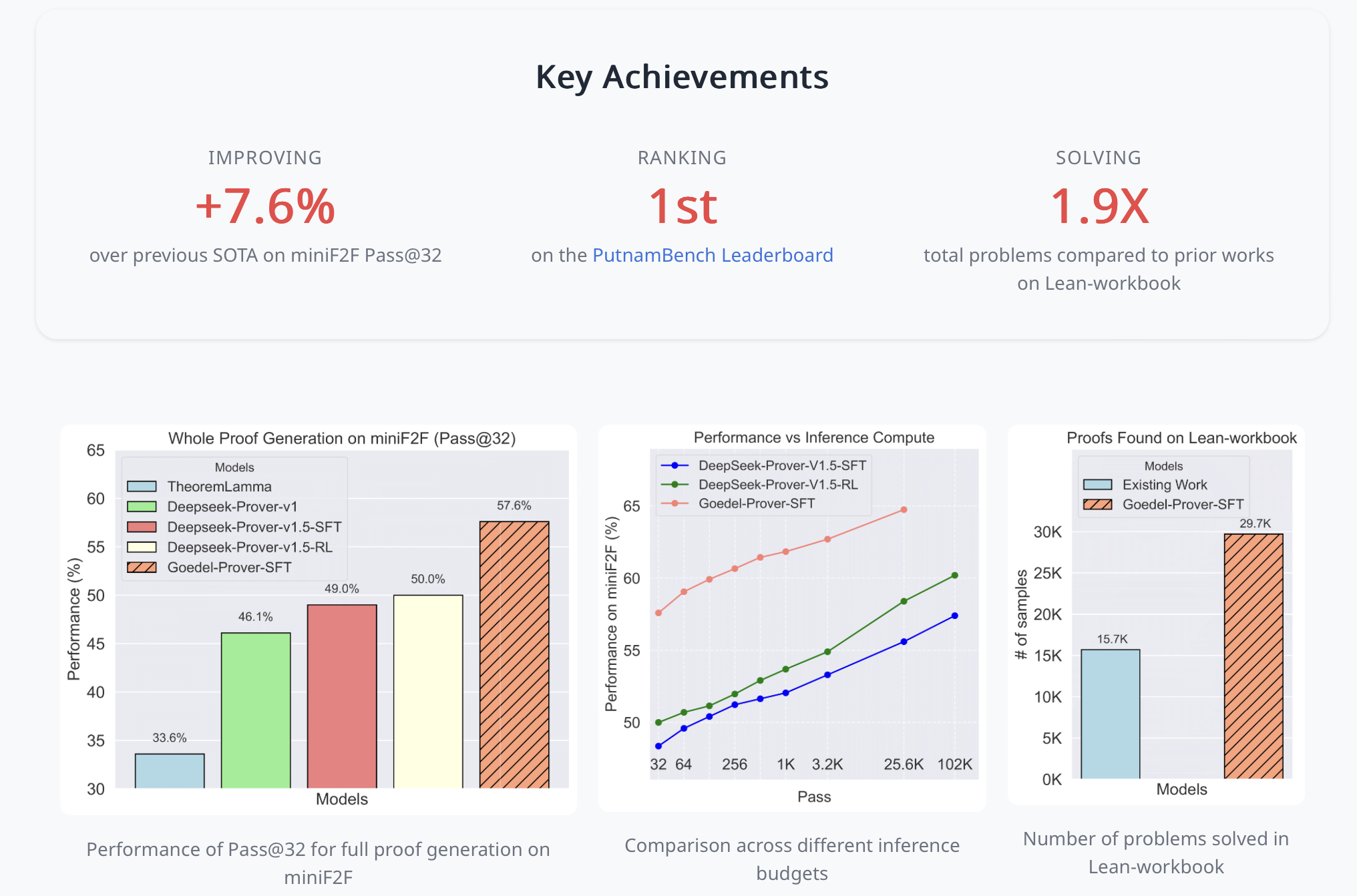
Goedel-Prover: A Frontier Model for Open-Source Automated Theorem ProvingYong Lin*, Shange Tang*, Bohan Lyu, Jiayun Wu, Hongzhou Lin, Kaiyu Yang, Jia Li, Mengzhou Xia, Danqi Chen, Sanjeev Arora, Chi Jin COLM 2025 arXiv / Code / Website / YouTube / BibTeX / The new 7B Goedel-Prover sets a new state-of-the-art in open-source automated theorem proving, beating previous records with a 7% improvement on miniF2F, topping the PutnamBench Leaderboard, and solving nearly twice as many problems on Lean Workbook. |
|
Adapting While Learning: Grounding LLMs for Scientific Problems with Tool Usage AdaptationBohan Lyu*, Yadi Cao*, Duncan Watson-Parris, Leon Bergen, Taylor Berg-Kirkpatrick, Rose Yu ICML 2025, AAAI 2024 FSS (Oral) arXiv / Code / Slides / Website / YouTube / BibTeX / This work proposes a fine-tuning method where LLMs internalize tool-generated solutions (World Knowledge Distillation) and learn to switch between direct answers and tool use for complex problems (Tool Usage Adaptation). It outperforms GPT-4 and Claude-3.5 across six scientific benchmarks. |
|
Enhancing Open-Domain Task-Solving Capability of LLMs via Autonomous Tool Integration from GitHubBohan Lyu*, Xin Cong*, Heyang Yu, Pan Yang, Cheng Qian, Zihe Wang, Yujia Qin, Yining Ye, Yaxi Lu, Chen Qian, Zhong Zhang, Yukun Yan, Yankai Lin, Zhiyuan Liu, Maosong Sun ACL 2025 (Main) arXiv / Code / Slides / Website / YouTube / BibTeX / Constructed OpenAct benchmark for complex open-domain task-solving. Developed a novel LLM agent system, OpenAgent, which leverages GitHub repositories to extend its capabilities to address diverse user queries. |
TalksTowards AI Systems That Build Better AI [Video (in Chinese)]
Fantastic CS PhD Opportunities and Where to Find Them [Slides]
The Curious Landscape of LLM Reasoning: An Overview of Techniques, Research Directions, and Challenges [Slides]
LLM Reasoning: From Informal to Formal [Slides]
|
 Peking University
 Tencent
|
|
|
Design and source code from Leonid Keselman's website |